


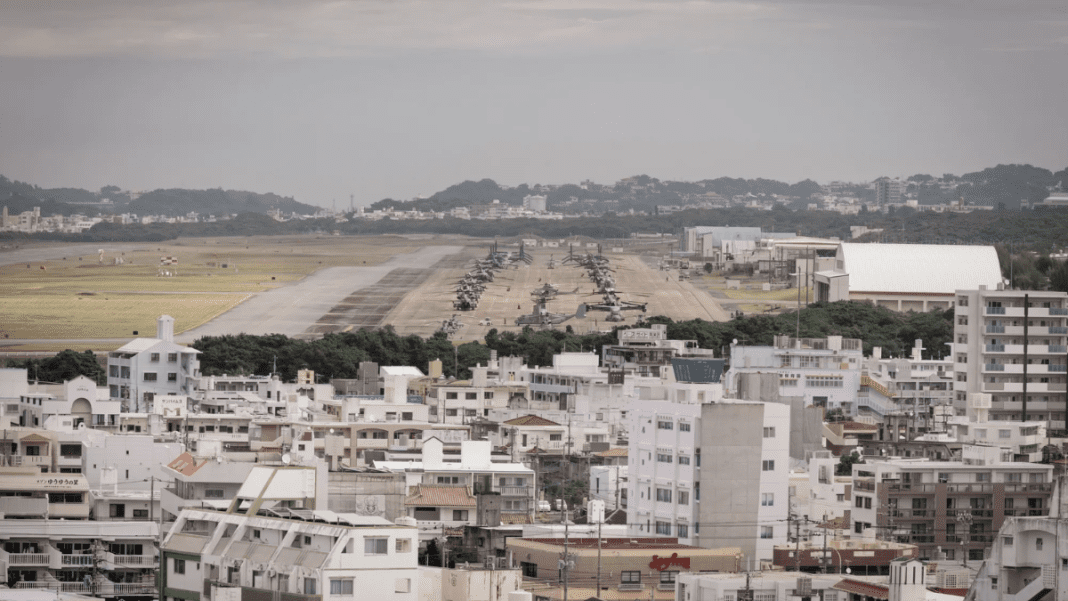


Japan is quickly transforming its southernmost Ryukyu islands into a heavily fortified defense zone, sparking concern and curiosity across the region. The move comes as relations between Japan and China reach levels of tension not seen in over a decade. At the center of this military buildup is the small island of Yonaguni, located just 110 kilometers east of Taiwan. Once known mainly for its scenic beaches and diving spots, Yonaguni is now becoming a critical strategic outpost for Japan’s national security.
The Ryukyu islands, stretching from Yonaguni toward Japan’s main islands, are taking on new importance. The chain spans a distance roughly equivalent to the coastline of California. Japan is installing missile batteries, radar systems, ammunition storage, and other military infrastructure across the Ryukyu islands. Meanwhile, Kyushu, Japan’s southernmost main island, is seeing upgrades including F-35 fighter jets, long-range missiles, and an expanded Amphibious Rapid Deployment Brigade, which serves as Japan’s version of the U.S. Marine Corps.
Ryukyu Military Buildup Responds to Regional Threats
The current militarization traces back to events in 2022, when a visit to Taipei by a high-ranking U.S. official prompted China to launch missile exercises near Yonaguni. Since then, Japan has accelerated its largest defense buildup in decades across the Ryukyu islands. The purpose is clear: protect Japanese territory and maintain a balance of power in the region.
Yonaguni itself is undergoing rapid change. New apartment buildings are being constructed to house soldiers, including units for electronic warfare and anti-air missiles. Around 30 additional personnel are joining the roughly 230 already stationed, with more expected as the island’s defenses expand. Local authorities and residents have raised questions about the buildup, prompting community meetings with Japan’s Defense Ministry. Officials stress that the deployments are defensive, including systems designed to detect and neutralize drones.
Recent incidents highlight the risks of the ongoing tensions. Chinese aircraft have locked weapons-targeting radar on Japanese planes in nearby airspace, demonstrating the high stakes and potential for miscalculation. Japan maintains a strict self-defense policy but has legal provisions allowing it to assist allies in critical situations. This includes coordinating with U.S. forces to defend Taiwan if Japan’s security is directly threatened.
Public Debate and Ryukyu Historical Context
The militarization of the Ryukyu islands, particularly Yonaguni, has sparked debate within Japan. Some opposition voices have criticized the government for creating what they call a “missile archipelago,” while officials defend the buildup as necessary to prevent attacks. Okinawa, the center of both American and Japanese military presence in the Ryukyu islands, remains sensitive to memories of World War II, especially the devastation experienced during the Battle of Okinawa.
Despite these concerns, younger Japanese appear largely supportive of the increased defense spending. A recent poll found that more than 83% of respondents aged 18 to 29 back the government’s plans to raise defense spending to 2% of GDP, even ahead of schedule.
Economy reels as Washington’s tariffs bite — Japan records first contraction in 6 quarters
The debate also intersects with historical territorial claims. China has cited World War II-era agreements to question Japanese sovereignty over Yonaguni and the Ryukyu islands, while Japan and its allies reject these claims, pointing to postwar treaties that restored control of the islands to Japan.
The strategic value of Yonaguni continues to grow. The new electronic warfare unit is expected to transform the island into a key part of Japan’s “kill chain,” feeding targeting information to missile systems across the Ryukyu islands. Analysts warn that this could make Yonaguni a high-priority target in the event of conflict. Local leaders are calling for transparency while recognizing the importance of strengthening defenses to protect residents and national interests.
Strategic Significance and Regional Security
Yonaguni and the wider Ryukyu chain are now at the forefront of Japan’s defensive network. The islands serve not only to protect Japan but also to reinforce the broader security framework led by the United States in East Asia. Joint exercises and missile deployments with allied forces are intended to deter potential aggression from neighboring countries.
Residents and officials continue to balance concerns about historical memory with the necessity of modern security. Defense officials emphasize that the deployments are purely defensive and not intended for offensive operations. The combination of new technology, missile systems, and close coordination with U.S. forces underscores Japan’s commitment to protecting its territory and contributing to regional stability.
As Japan accelerates its fortification of the Ryukyu islands, Yonaguni has become a symbol of both the nation’s rising defense capabilities and the complex strategic environment in the Taiwan Strait and East China Sea. The ongoing changes illustrate how historical legacies, public opinion, and modern military technology intersect in shaping Japan’s approach to national security.