
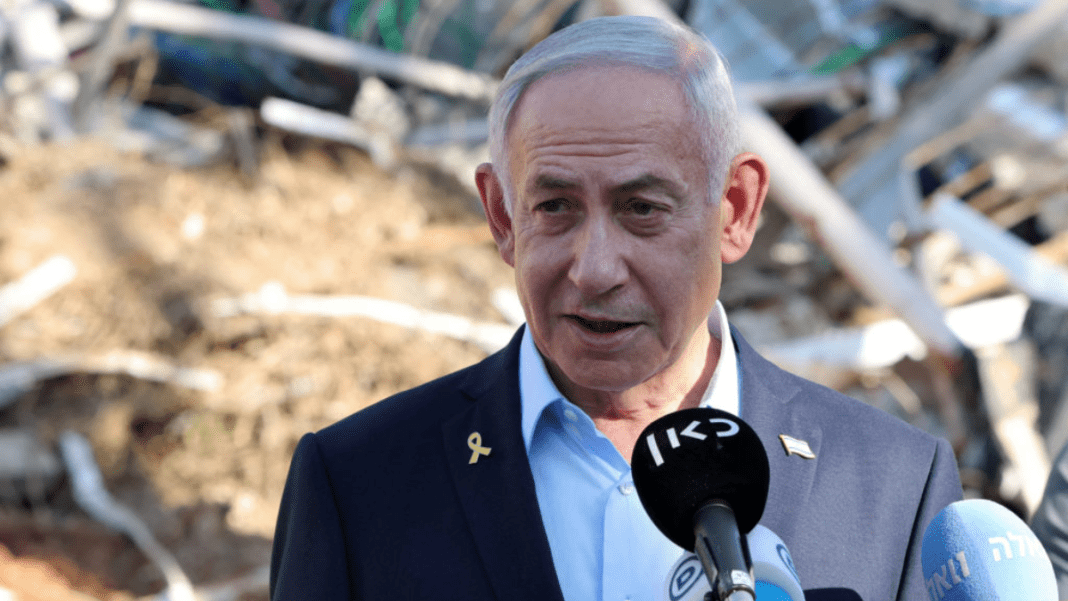

The war between Israel, the United States and Iran has entered a highly intense phase. Prime Minister Benjamin Netanyahu’s government reported new strikes, retaliations, and deadly explosions across the Middle East. The situation remains dangerous. It continues to evolve rapidly.
Escalation: Iran Revolutionary Guards Target Netanyahu’s Office
Iran’s military, the Islamic Revolutionary Guard Corps (IRGC), announced missile attacks targeting Israeli Prime Minister Benjamin Netanyahu’s office and other key defense sites. Iranian state media reported the claim, which was also cited by several international news agencies. The announcement comes after days of airstrikes and retaliatory actions between Israel, the United States, and Iran.
The IRGC described the attacks as “surprise missile strikes” aimed at Israel’s government and military leadership. Reports indicate that missiles targeted Netanyahu’s official workspace and the Israel Air Force headquarters. Iran framed the action as retaliation against recent U.S. and Israeli strikes, which have intensified as the conflict spread across the region.
Russia steps into Middle East diplomacy as Putin holds talks with Netanyahu and Iran’s president
Israel has not confirmed any damage to Netanyahu’s office, and independent verification is unavailable. Analysts note that strikes near Netanyahu could have major political and military implications. These events underscore the growing intensity of the conflict, with leadership buildings and critical infrastructure now directly targeted.
Joint U.S.–Israeli Airstrikes and Iranian Casualties
Iran is reporting significant civilian and military losses following several days of airstrikes by United States and Israeli forces. Officials say that at least 27 people have been killed in the northwest province of East Azerbaijan over the past two days. Local authorities confirmed that the casualties include both military personnel and civilians. This highlights the human toll of the ongoing conflict.
These strikes are part of a broader military operation by the U.S. and Israel. The operation reportedly targeted strategic Iranian military sites, leadership compounds, air defense systems, and other key infrastructure. Warplanes and missile systems continue to engage in other parts of Iran. Explosions have been reported in several cities beyond Tehran, showing that the conflict is far from confined to one area.
Iran Plotted Trump’s Assassination Over Nuclear Deal Fallout, Netanyahu Alleges
The fighting has expanded beyond Iran and Israel. Neighboring countries and allied groups are now involved. In Lebanon, exchanges of rocket fire and air attacks have taken place between Israel and the Lebanese militant group Hezbollah along the Israel‑Lebanon border. These events followed Iran’s recent missile strikes. Meanwhile, any developments targeting Netanyahu are closely watched by Israel’s allies. These could influence the course of the conflict.
Iran’s armed forces have also launched missile and drone attacks toward several Gulf states. These include Saudi Arabia and the United Arab Emirates. Both infrastructure and military sites have been targeted.
Iranian statements further claimed strikes on U.S. military assets in the Persian Gulf, though independent verification is limited. These developments indicate that the conflict has escalated into a wider regional confrontation, with multiple fronts now actively engaged.
Global and Political Impact So Far
The rising death toll and extensive damage across the region have drawn responses from world governments and international organizations. U.S. President Donald Trump has stated that military operations will continue until all U.S. objectives are met, emphasizing the use of full force in ongoing strikes.
Israel has confirmed its continued commitment to the military campaign, calling it necessary to protect the country against Iranian missile threats. Officials stressed that operations will carry on despite the intensifying conflict and rising casualties, and any threats to Netanyahu remain a top national security concern.
Netanyahu warns of Iran rebuilding nuclear and missile capabilities after June war
Major powers, including China, have urged both sides to agree to a ceasefire and pursue diplomatic solutions. They highlighted the urgent need to de-escalate tensions and prevent the conflict from spreading further across the Middle East.
The situation remains highly volatile, with continued air and missile exchanges across multiple fronts. Regional actors are preparing for further impacts as the confrontation continues to escalate, drawing in neighboring nations and allied groups. The international community continues to monitor the situation closely, especially developments involving Netanyahu, as they could significantly affect Israel’s defense and political response.