
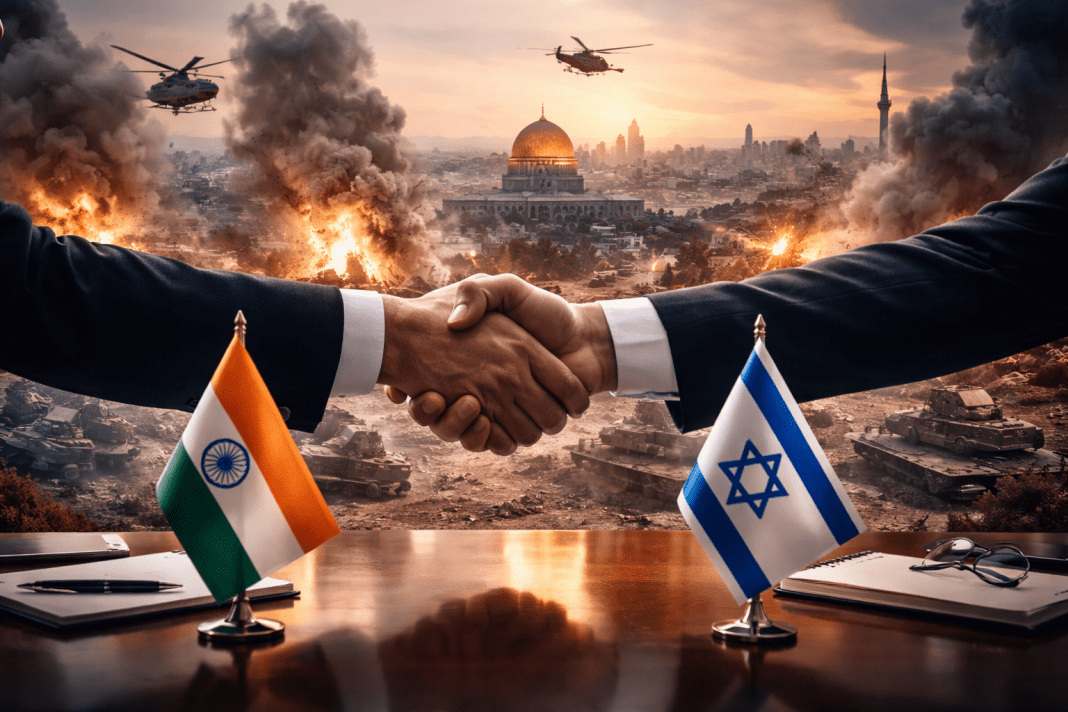

As the Middle East conflict continues to draw global attention, diplomatic efforts to ease tensions have begun to intensify, with the role of a mediator becoming increasingly important. Countries across the world are exploring ways to help restore stability, as mediation emerges as a key focus. In this context, differing views have surfaced over which nations are best suited to step in as neutral mediators, highlighting shifting dynamics in international diplomacy amid an increasingly complex and fast-moving crisis.
Multi-Front Conflict Deepens, Focus Shifts to Mediator Role
As the Middle East war entered its second month, efforts to reduce tensions and push for peace increased. Several countries showed interest in acting as mediators. Pakistan attempted to present itself as a key diplomatic player, but Israel indicated that it views India as a more suitable partner for mediation.
According to an Israeli envoy, the conflict escalated rapidly after it began. What started as a single-front situation quickly turned into a multi-front conflict, with attacks reported from both the south and the north within days. This swift expansion made the situation more complex and harder to manage.
Beyond a military alliance: Pakistan leads ‘Islamic NATO’ talks to pass messages for peace
The conflict has remained tense, with ongoing military operations and frequent exchanges of fire. These developments have raised concerns about wider regional instability. With multiple actors involved and the situation continuing to evolve, the need for a credible mediator has become increasingly important.
Claims of Military Gains and Rising Instability
In the past month, Israel has claimed that it has made significant military progress. According to the envoy, a large portion of rocket-launching capabilities used by opposing forces has been destroyed. Naval strength has also reportedly been weakened, and key leadership figures have been targeted.
These developments, if accurate, suggest a shift in the balance of power on the ground. The envoy also spoke about signs of internal instability within Iran. Reports of divisions, defections, and confusion in strategy were highlighted as indicators of weakening control.
The situation has been described as chaotic, with rockets being launched in multiple directions. This unpredictability has raised concerns about safety in the region. The ongoing attacks have kept military forces on high alert, and civilians in affected areas continue to face risks.
India and China among selected countries allowed transit through the Strait of Hormuz
At the same time, the United States is said to be following a dual approach. This includes both diplomatic efforts and continued military pressure. The idea behind this strategy is to keep the door open for negotiations while also maintaining strength on the battlefield.
The envoy explained that giving room for talks while continuing military action could create pressure on the opposing side to step back. This approach aims to balance force with the possibility of dialogue, even as the conflict continues.
India Preferred Over Pakistan for Mediation Role
A key point highlighted was the comparison between India and Pakistan as potential mediators in the ongoing Middle East conflict. While Pakistan attempted to present itself as a diplomatic player, Israel expressed clear doubts about its effectiveness and questioned whether its involvement would lead to meaningful or lasting outcomes in such a complex situation.
Concerns were also raised about Pakistan’s internal challenges, particularly issues linked to extremism. These factors were seen as affecting its credibility on the global stage. As a result, its ability to act as a neutral and trusted mediator in a sensitive international conflict was viewed with skepticism.
Pakistan signals end of neutrality, invoking defense alliance to stand by Saudi Arabia
In contrast, India was described as a more reliable and balanced partner. India maintains strong relations with Israel while also keeping diplomatic ties with several other countries involved in the region. This balanced approach allows India to communicate with different sides and maintain trust, which is considered essential for any mediation role.
The envoy also noted that India’s consistent engagement in global diplomacy has strengthened its position internationally. On the issue of Iran’s nuclear programme, a firm stance was emphasized, with no room for compromise due to security concerns. Overall, the remarks reflected a clear preference for India as a mediator.