
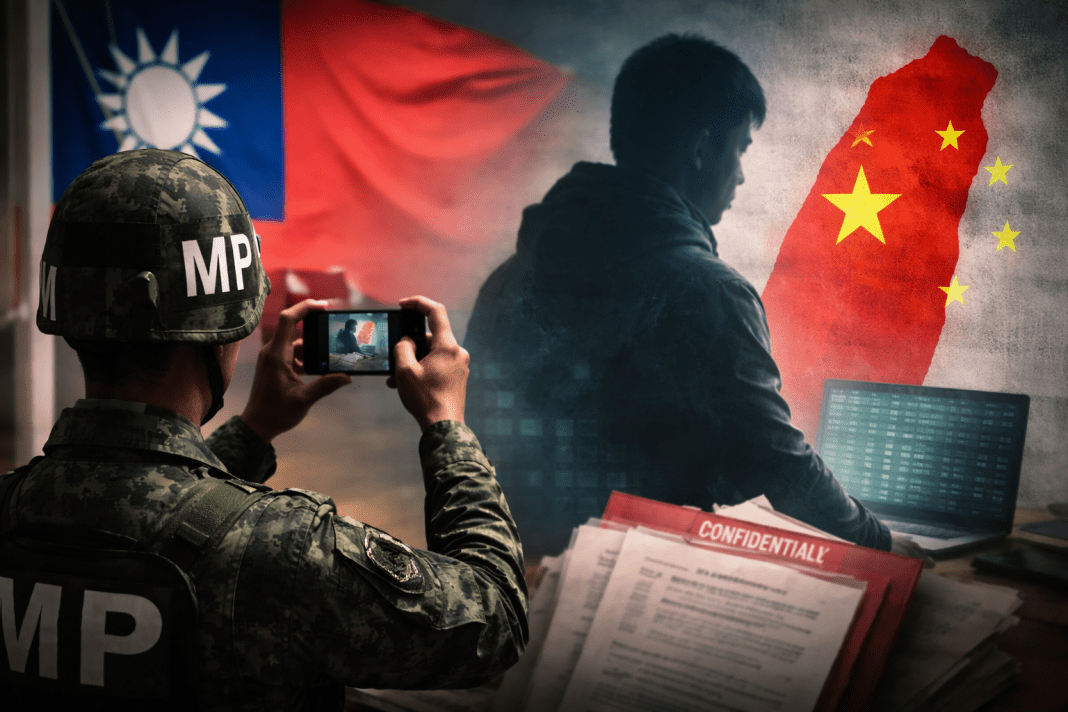

China’s spying in Taiwan has become more organized, reaching deep into the military and even near the president’s office, aiming not just to steal secrets but to weaken the island; the case of Sgt. Lai Chung-yu, along with dozens of other active or former military members charged with helping China, shows how simple methods can carry serious risks.
Sgt. Lai Chung-yu and a Simple Trap That Led to Big Secrets
Sgt. Lai Chung-yu served in a military police battalion guarding Taiwan’s presidential office building, which also houses the vice president and the National Security Council. Guards there know every detail of who comes in, who goes out, and how security works.
Lai also had personal problems. He was in debt and searching online for loans when he encountered a Chinese agent. The agent offered easy money. Lai did not need to steal weapons or break in; he only had to take photos of documents and security details with his phone.
Taiwan detains journalist in rare espionage case over alleged military leaks to China
According to authorities, Lai started sending photos in 2022, when Tsai Ing-wen was president. He was paid in cryptocurrency called Tether. The more sensitive the information, the higher the payment.
At first, Lai worked alone, later involving another soldier from the Defense Ministry’s cybersecurity command. When Lai was reassigned and lost access to sensitive areas, he recruited a sergeant and a corporal to continue.
Over two years, the group sent China names and photos of officials, guard lists with call signs, and security training materials. Experts say small pieces like these can be combined into a complete picture of critical locations.
The spying continued through Taiwan’s January 2024 election. It ended when another soldier reported suspicious activity in August 2024. Lai and three others were arrested in December and convicted by March. Lai received seven years in prison, earning around $15,000; the others received similar sums. Prosecutors said it was shocking how little money prompted such serious breaches.
How China Finds and Recruits Its Targets
Authorities say Lai’s case fits a larger pattern. China increasingly uses social media and the internet to find people easy to pressure or tempt.
Low-ranking soldiers are frequent targets, often earning modest pay, struggling with debt, or engaged in risky habits. Chinese agents exploit these vulnerabilities. Simple approaches, like fake job offers or social media posts, can lure soldiers to share small details. Once engaged, they may provide even more sensitive information.
Taiwan’s military warns soldiers with posters showing common tricks: agents may offer money, business opportunities, or even romantic favors. Posters highlight those most vulnerable, like gamblers or people involved in secret relationships. Hotline numbers allow soldiers to report suspicious activity.
China warns Europe not to admit Taiwanese politicians, citing diplomatic ‘red lines’
Taiwan’s investigation bureau says paying small amounts to many low-level soldiers is “good value” for China. Each soldier may know little, but together they provide a powerful intelligence network.
The numbers are striking. In 2024, prosecutors charged 64 people in 15 suspected Chinese espionage cases, up from just three in 2021. Nearly two-thirds were military personnel, active or retired. Taiwan’s defense minister said almost 90% of cases were discovered through internal tips, highlighting the importance of vigilance inside the military.
New Technology, Old Tools, and a Growing Danger
Spying today often requires no secret gadgets. Smartphones alone can take clear photos of documents and send them instantly.
In one case, an air force sergeant used a Chinese app to bypass security software and photograph classified papers. In another, a businessman used mapping tools to record roads and buildings, useful for Chinese military planning.
Even simple actions can be damaging. A Marine sergeant was accused of recording a video pledging loyalty to Beijing while holding a Chinese flag. He earned over $6,000 for the video and extra money for sharing information about weapons.
Experts say these efforts aim to weaken trust—among Taiwanese people and Taiwan’s partners abroad. Former U.S. intelligence officials call it “cognitive warfare,” focusing on influencing beliefs and confidence.
Taiwan’s president said China is exploiting the island’s openness to divide and weaken it from within. Sgt. Lai’s story shows how small temptations and simple tools can compromise national security, illustrating a larger problem already present in Taiwan’s military.